Even more praise for the Texas Rangers.
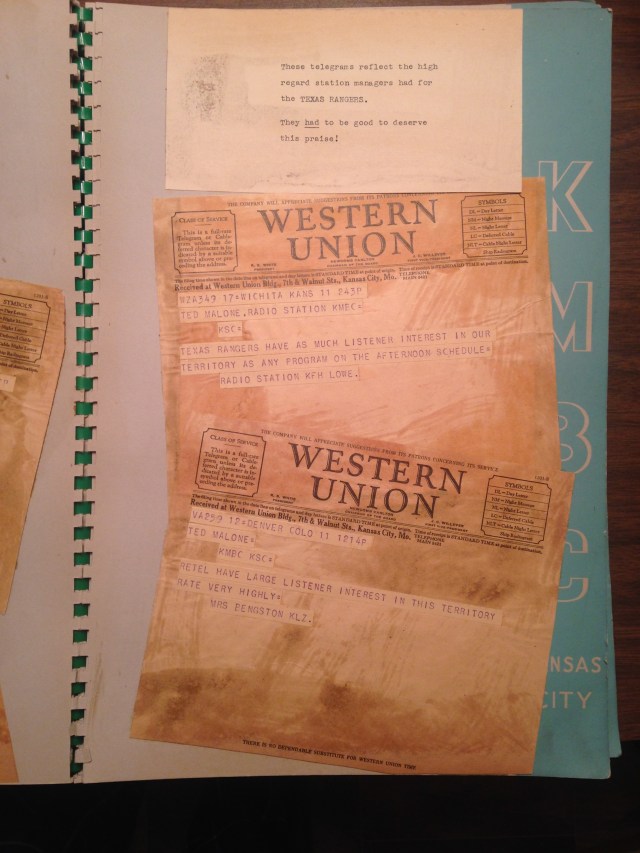

Even more praise for the Texas Rangers.
More praise for the Texas Rangers. I looked up the cost of sending a telegram in 2013 and it was exorbitant.
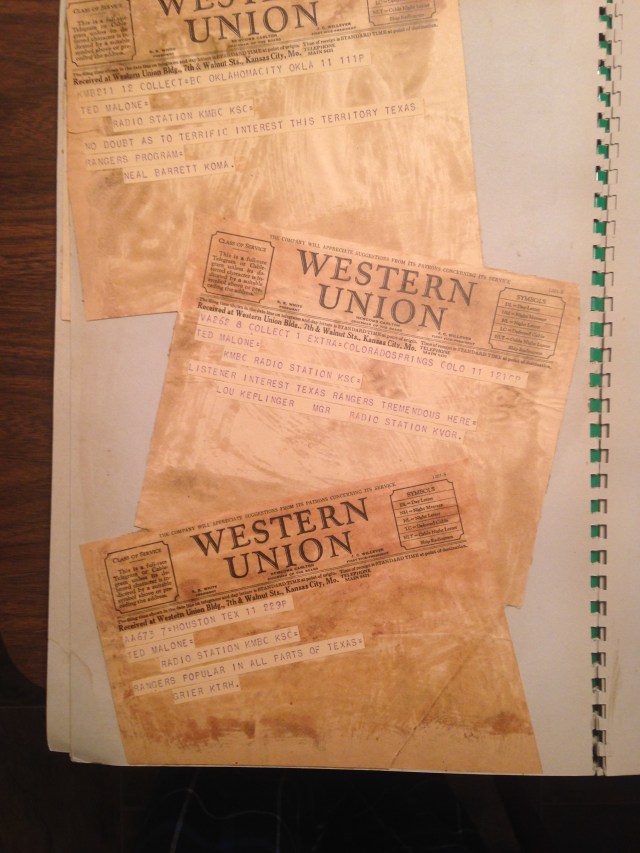
January 11, 1935, predates the release of their first transcribed series Life on the Red Horse Ranch. The band had been appearing intermittently on CBS’ West Coast network, however, since 1932.

Some telegrams addressed to KMBC program manager Ted Malone praising the Texas Rangers. Malone was, himself, a man of no small talent. He became a staple on CBS with his Between the Bookends series and didn’t go off the air for good until 1986.

Don’t let the costumes fool you! None of the Texas Rangers hailed from Texas nor is there any documentation to suggest any of them cowboys or Westerners by any stretch of the imagination. Paul Sells came from Lima, Ohio, and several of the earliest members including both Gomer Cool and Bob Crawford were natives of northwestern Missouri.
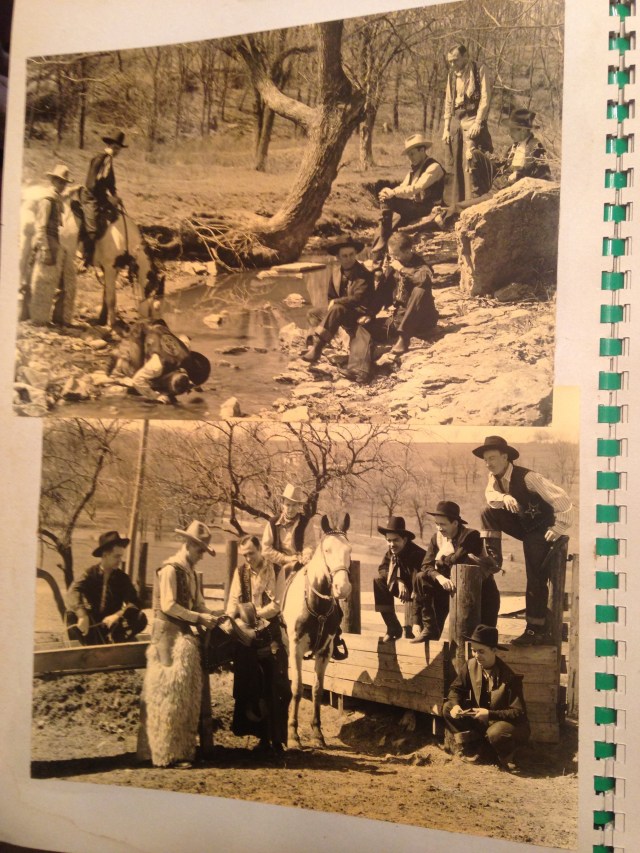
Though an octet at its fullest, the Texas Rangers were a talented ensemble and could be trotted out by KMBC management in various configurations – all the way down to individual acts – to meet audience demand.
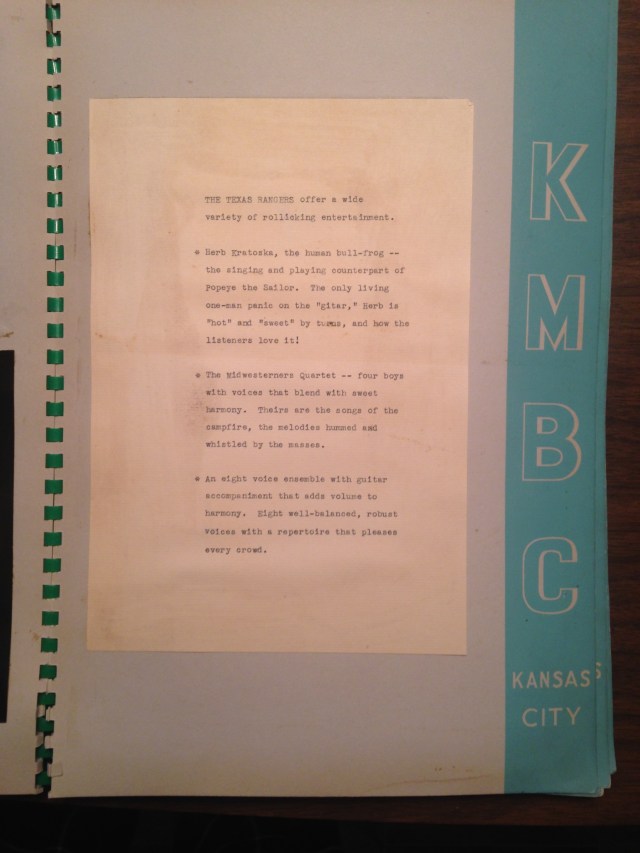
Frequently known as The Midwesterners, the quartet portion of the Texas Rangers was comprised of Robert Crawford, Rod May, Fran Mahaney, and Edward (Tookie) Cronenbold. The quartet appeared on KMBC’s long-running Happy Hollow as The Happy Hollow Barbershop Quartet and sometimes the Lamp Post Four. The guitarist was Herb Kratoska.
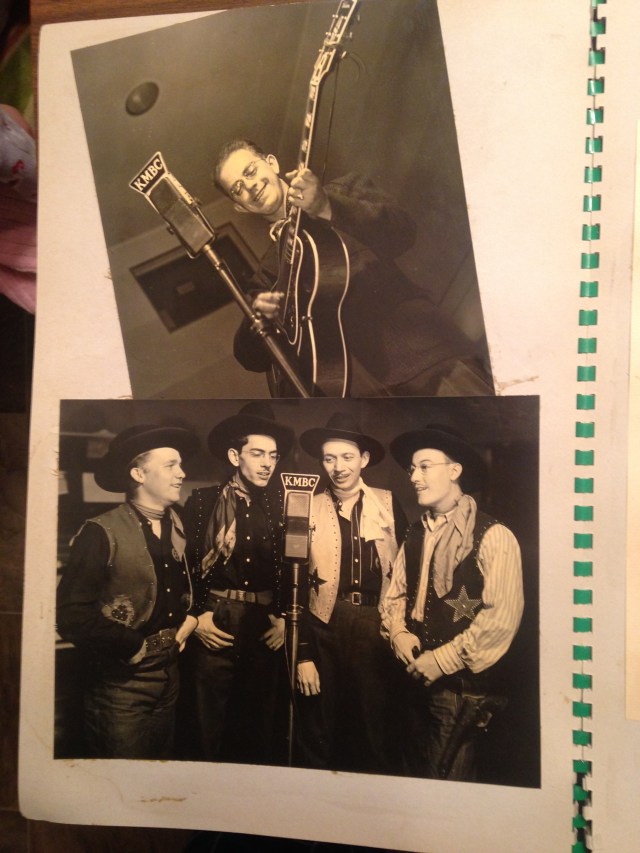
As mentioned in the Texas Rangers book, none of the original Rangers musicians were actually country – or hillbilly, as the genre was frequently called at the time – musicians. Accordianist Paul Sells had had his own nightclub orchestra and fiddler Gomer Cool was classically trained. They practiced a lot to get a more Western sound but their repertoire over the years was very diverse, with ballads, spirituals, hymns, folk, and even patriotic tunes finding a spot in their recorded catalog.
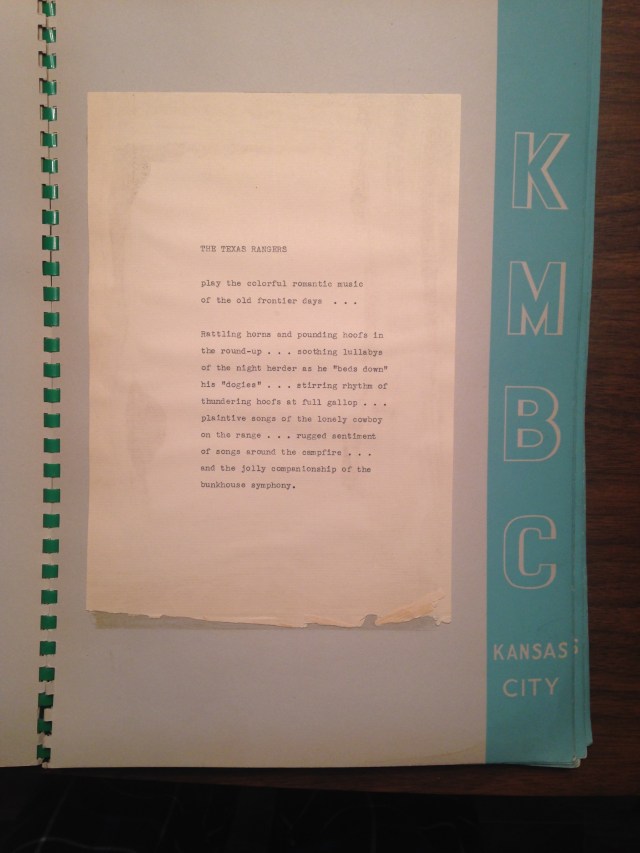
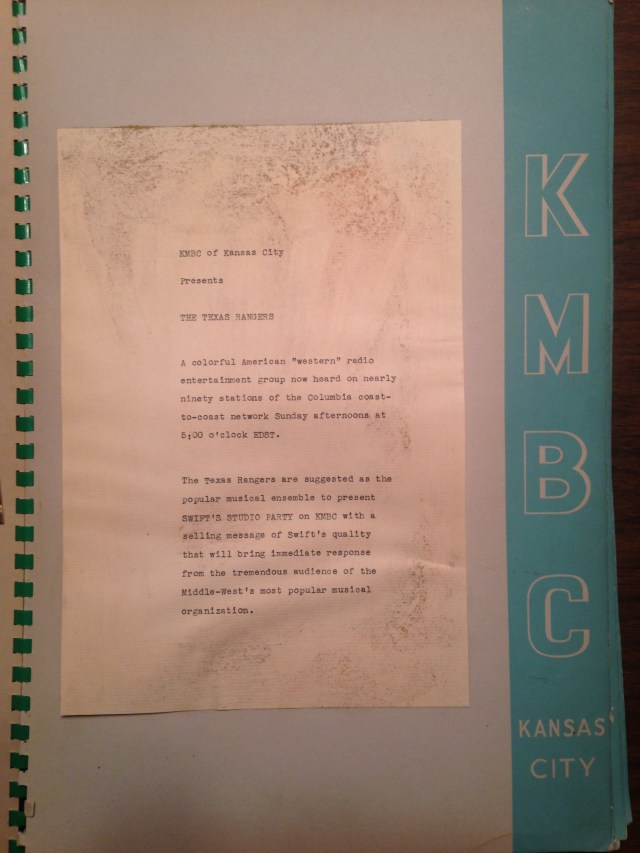
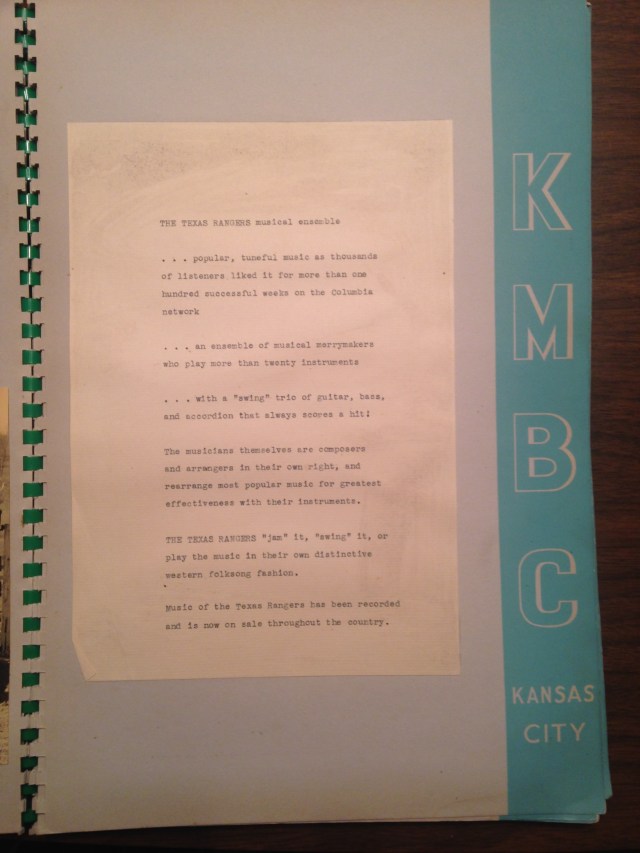
This page suggests the whole portfolio was made up for a company called Swift, possibly the Swift & Co. Packing Co.
 Wistful Vistas