This plug for the debut broadcast of Caroline’s Golden Store (Monday, June 5) is from the Cincinnati Enquirer.
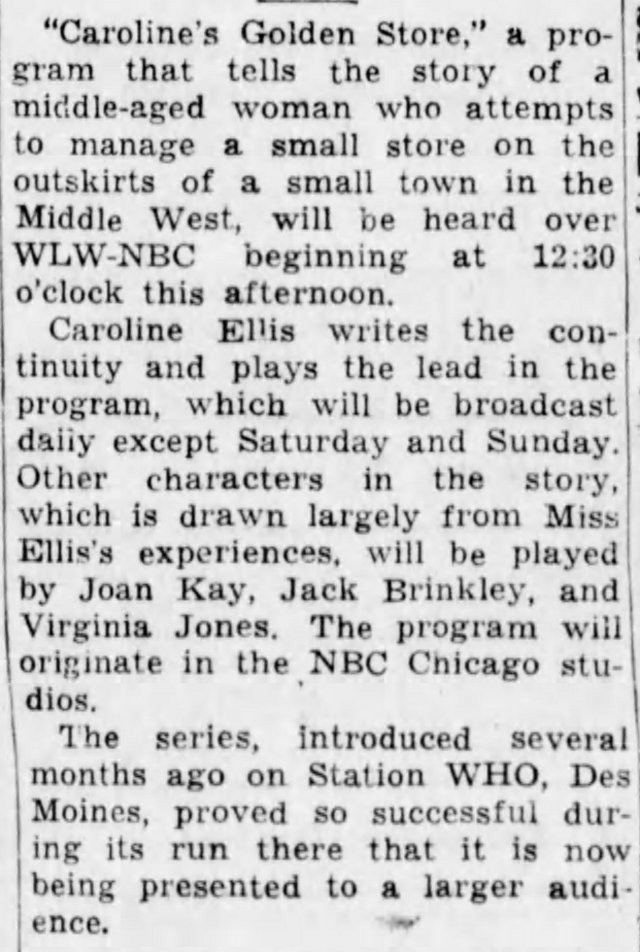

This plug for the debut broadcast of Caroline’s Golden Store (Monday, June 5) is from the Cincinnati Enquirer.
Caroline Ellis’ Caroline’s Golden Store debuted over NBC’s Midwest circuit (originating from Chicago’s WMAQ) in June 1939 after a six-month test run in Des Moines. Here is a note of that debut broadcast.

In preparation for the release of my book on Kansas City radio homemaker Caroline Ellis, I will be posting clippings that were not able to be included in the book. These first few will focus on her program Caroline’s Golden Store. This is from August 16, 1938 when it premiered over Des Moines’ WHO. Find it near the bottom of the schedule in the 11:30 timeslot against Sum Fun, Inquiring Mike, and Sweet and Swing.

Eddie Cantor was a radio staple through the 1930s and even into the early 1950s. He’s been identified as appearing on radio as early as 1922, and this article from the August 1922 Wireless Age is possibly an account of that February broadcast.
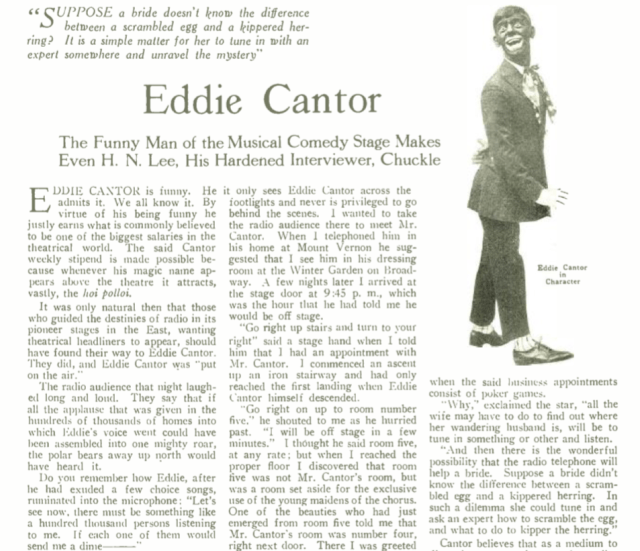
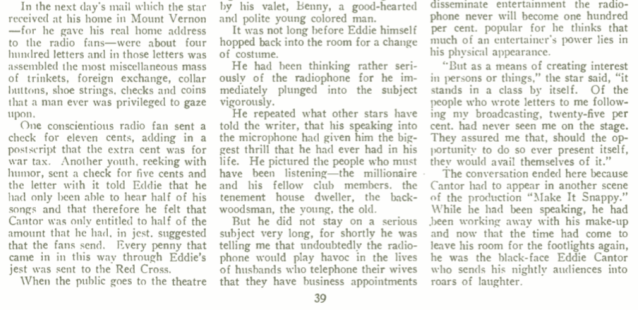
From July 1922 Wireless Age. Anyone have further documentation from this even?
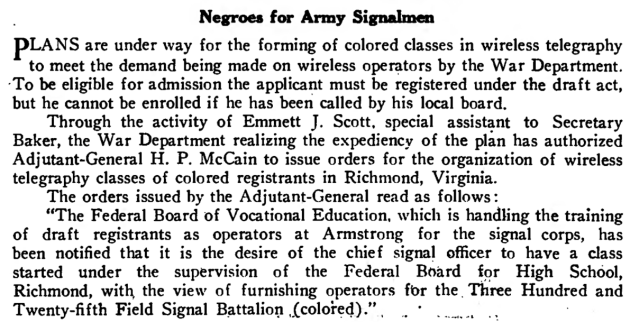
From the May 1918 Wireless Age. Are you related to any of these pioneering men?
From the January 1920 issue of Wireless Age:
Negro Operator in Overseas Service – Perry Van Derzee, Topeka, will sail for overseas service as a wireless operator, according to word received in Topeka by his father.
Perry Van Derzee is thought to be the only negro wireless operator holding a United States Government radio license. He is a graduate of three wireless schools.
Any descendants of Mr. Van Derzee still living in the Topeka, KS, area?
Here are some promotional photos that were used in different radio magazines from 1929-1930 to publicize NBC’s Harbor Lights, a series profiled previously.
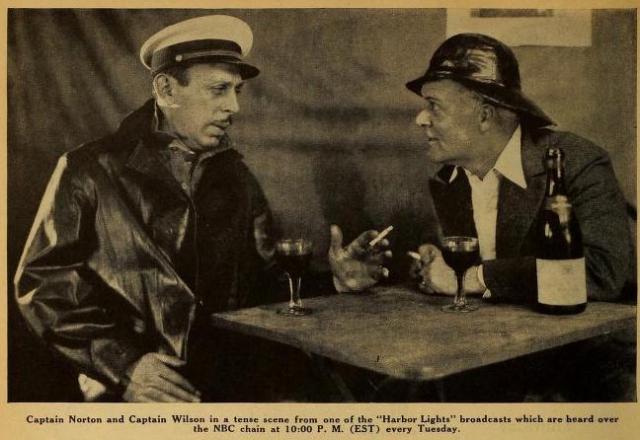
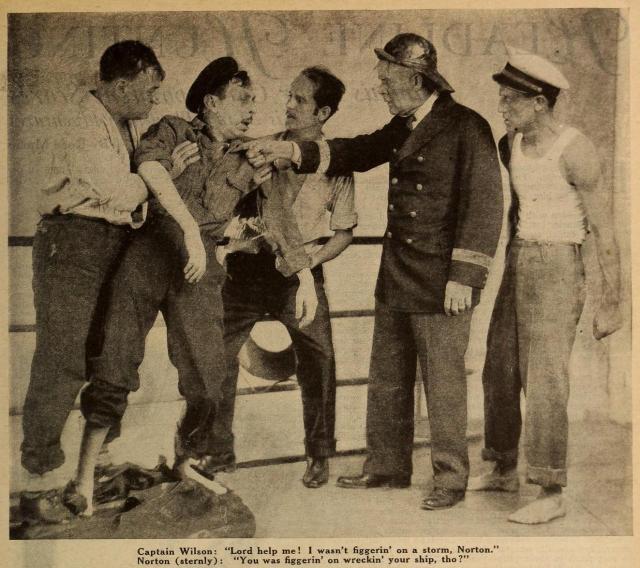
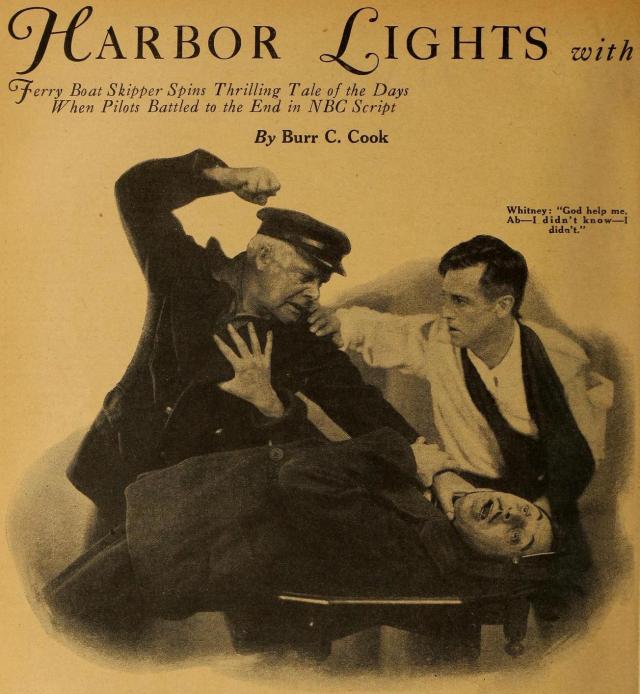
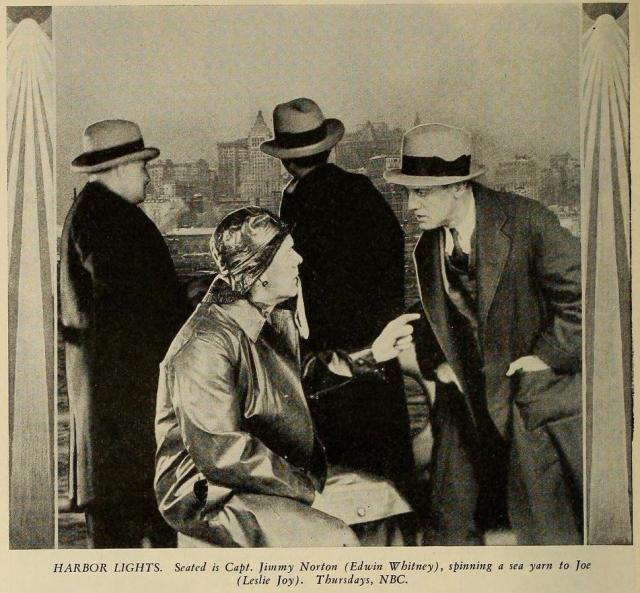
Harbor Lightswas an early dramatic radio program that aired across NBC between 1929 and 1931. Originally airing at 10:00 on Tuesday nights, it eventually moved to Sunday evenings. Originating from the network’s WEAF studios in New York City, Harbor Lightsfocused on stories of the sea and each week’s episode dramatized an adventure told by the show’s central character, Captain Jimmy Norton, to a young friend. The Norton character was portrayed as a crusty old ferry boat skipper who plied the waters of New York Harbor, providing the scriptwriters with an endless well of ocean-going fare around which they could build scripts. Every week the NBC announcer intoned to his audience, “All aboard! The Harbor Lights are beckoning!”
Considerable credit was given to the series’ lead writer, Burr Cook, who was both a former seaman himself and who was also willing to spend time in the haunts of Sailor’s Snug Harbor on New York’s Staten Island. Sailor’s Snug was a privately bequeathed and funded home for old seafarers who had no better retirement prospects. Though the facility hits its peak in the late 1800s, in 1931 there was still a large number of salts living there who were willing to share their experiences and tales – real or imagined – of lives spent on the ocean. Burr Cook was also behind the Friday feature The Eternal Question but his contribution to radio is overshadowed by the career of another Cook, his brother of Phil Cook who was a prolific voice actor busy in the industry through the 1930s.
Edwin M. Whitney was the lead actor of Harbor Lights, bringing to vivid life the character of Captain Jimmy Norton. Whitney had a considerable theater background and was very busy in New York radio productions at the dawn of the 1930s. Whitney claimed Parma City, NY, as his home and sang with the Whitney Brothers Quartet (Alvin, William, and Yale Whitney) when he was younger. Whitney recorded a number of songs for Victor between 1908 and 1910, the bestseller of the lot bearing the cringe-worthy title “Darky and the Boys.” Perhaps Whitney’s most memorable role was that of Judge Whipple on Real Folks, though on the same show he also played Gran’pa Overbrooks, Bill Perkins the station agent, Colonel Weatherbee, and a dog named Prince. Other radio credits included various roles on Death Valley Days and The Esso Hour.
Harbor Lights was noted for its sound effects, and NBC director Vernon Radcliffe was given credit for their detail and realism. He created the unique opening aural sequence of vehicles driving onto a ship, gates closing behind them, the tinkling of bells, followed by the great blasts of the ferry’s whistle and the sound of its mighty engines. Other performers on the program included Leslie Joy, Walter Soderling, Ray Carter (announcer), Helene Handin, and Tom Moore.
Unfortunately, recordings of Harbor Lightsaren’t known to circulate among collectors chances are probably slim that any will turn up of such an early program. However, interested readers can access a recreation of a Harbor Lightsepisode that was originally broadcast during the last ten minutes of the January 12, 1941 episode of Behind the Mike. Similarly, one full script can be read in Peter Dixon’s 1931 book Radio Writing, a copy of which can also be found online with a little searching.

 Wistful Vistas