“Caroline’s Golden Store” Debut Radio Schedule

In preparation for the release of my book on Kansas City radio homemaker Caroline Ellis, I will be posting clippings that were not able to be included in the book. These first few will focus on her program Caroline’s Golden Store. This is from August 16, 1938 when it premiered over Des Moines’ WHO. Find it near the bottom of the schedule in the 11:30 timeslot against Sum Fun, Inquiring Mike, and Sweet and Swing.

Des_Moines_Tribune_Mon__Aug_15__1938_

Perry Van Derzee

From the January 1920 issue of Wireless Age:

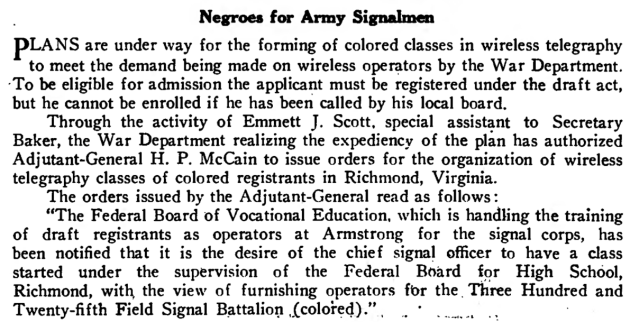
Negro Operator in Overseas Service – Perry Van Derzee, Topeka, will sail for overseas service as a wireless operator, according to word received in Topeka by his father.
   Perry Van Derzee is thought to be the only negro wireless operator holding a United States Government radio license. He is a graduate of three wireless schools.


Any descendants of Mr. Van Derzee still living in the Topeka, KS, area?

The Faint Glow of Harbor Lights

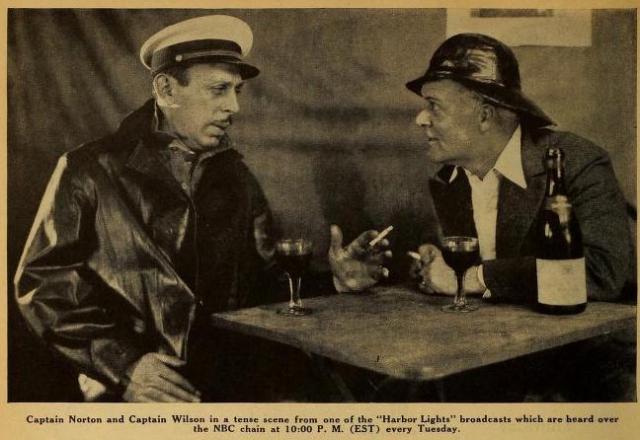
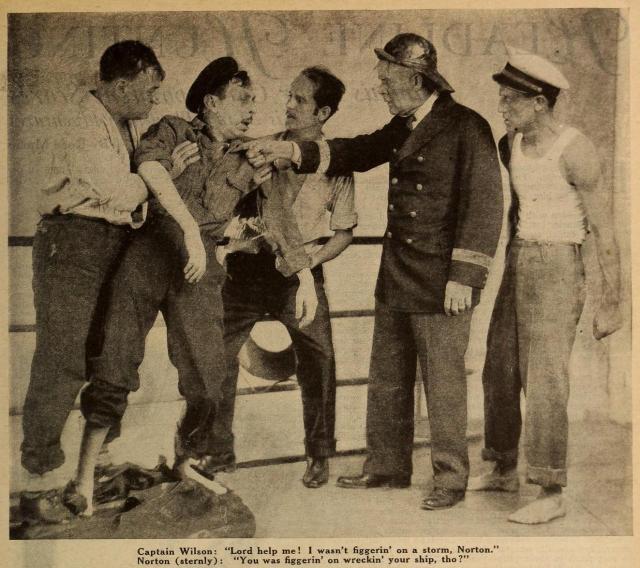
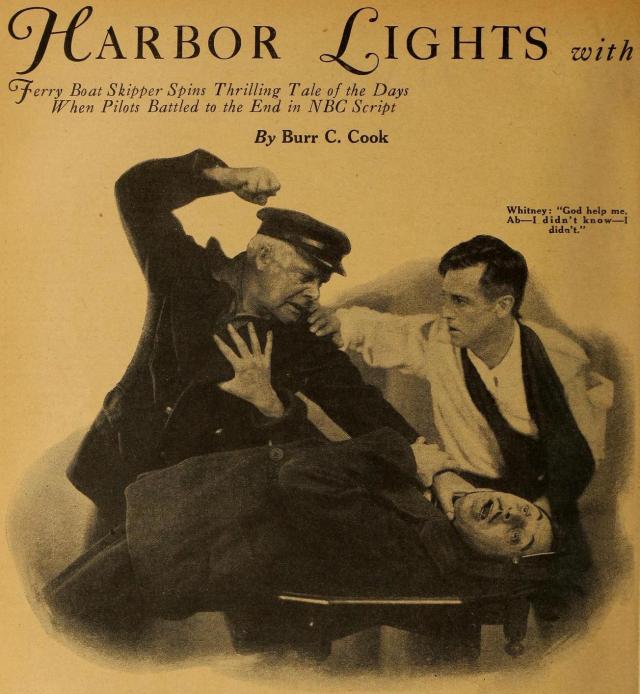
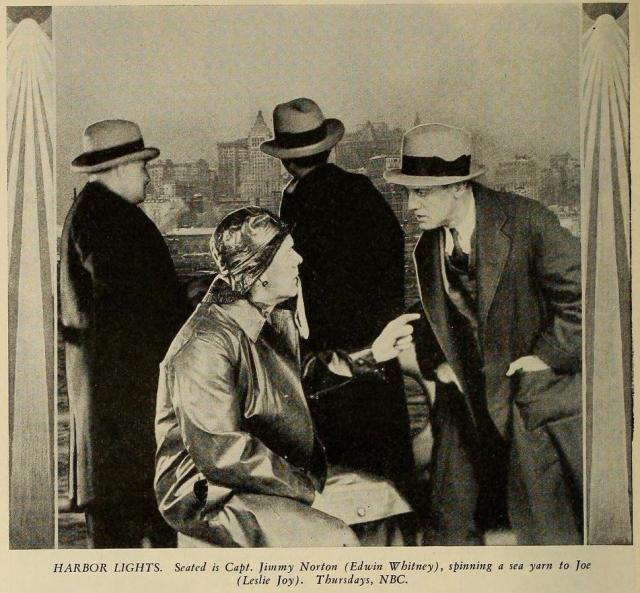
Harbor Lightswas an early dramatic radio program that aired across NBC between 1929 and 1931. Originally airing at 10:00 on Tuesday nights, it eventually moved to Sunday evenings. Originating from the network’s WEAF studios in New York City, Harbor Lightsfocused on stories of the sea and each week’s episode dramatized an adventure told by the show’s central character, Captain Jimmy Norton, to a young friend. The Norton character was portrayed as a crusty old ferry boat skipper who plied the waters of New York Harbor, providing the scriptwriters with an endless well of ocean-going fare around which they could build scripts. Every week the NBC announcer intoned to his audience, “All aboard! The Harbor Lights are beckoning!”

Considerable credit was given to the series’ lead writer, Burr Cook, who was both a former seaman himself and who was also willing to spend time in the haunts of Sailor’s Snug Harbor on New York’s Staten Island. Sailor’s Snug was a privately bequeathed and funded home for old seafarers who had no better retirement prospects. Though the facility hits its peak in the late 1800s, in 1931 there was still a large number of salts living there who were willing to share their experiences and tales – real or imagined – of lives spent on the ocean. Burr Cook was also behind the Friday feature The Eternal Question but his contribution to radio is overshadowed by the career of another Cook, his brother of Phil Cook who was a prolific voice actor busy in the industry through the 1930s.

Edwin M. Whitney was the lead actor of Harbor Lights, bringing to vivid life the character of Captain Jimmy Norton. Whitney had a considerable theater background and was very busy in New York radio productions at the dawn of the 1930s. Whitney claimed Parma City, NY, as his home and sang with the Whitney Brothers Quartet (Alvin, William, and Yale Whitney) when he was younger. Whitney recorded a number of songs for Victor between 1908 and 1910, the bestseller of the lot bearing the cringe-worthy title “Darky and the Boys.” Perhaps Whitney’s most memorable role was that of Judge Whipple on Real Folks, though on the same show he also played Gran’pa Overbrooks, Bill Perkins the station agent, Colonel Weatherbee, and a dog named Prince. Other radio credits included various roles on Death Valley Days and The Esso Hour.

Harbor Lights was noted for its sound effects, and NBC director Vernon Radcliffe was given credit for their detail and realism. He created the unique opening aural sequence of vehicles driving onto a ship, gates closing behind them, the tinkling of bells, followed by the great blasts of the ferry’s whistle and the sound of its mighty engines. Other performers on the program included Leslie Joy, Walter Soderling, Ray Carter (announcer), Helene Handin, and Tom Moore.

Unfortunately, recordings of Harbor Lightsaren’t known to circulate among collectors chances are probably slim that any will turn up of such an early program. However, interested readers can access a recreation of a Harbor Lightsepisode that was originally broadcast during the last ten minutes of the January 12, 1941 episode of Behind the Mike. Similarly, one full script can be read in Peter Dixon’s 1931 book Radio Writing, a copy of which can also be found online with a little searching.

Looking Back: The Old-Time Radio Hobby from 1959 to 1971, Pt. 3

This article originally appeared in The Old Radio Times, March 2007.

Before I head back to the yellowed, crumbling fanzines, I leave you with some interesting notes and tidbits I culled from my oldest issues. I point out names of folks who, I believe, are still active today, 35 years later. I also note publications mentioned in their pages in case any of you have old memories (or issues) of them to share. 

The Old-Time Radio Researchers continue to save as many of these fanzines as we can, and scanning them to make them available to everyone (http://www.otrr.org/pg06b_magazines.htm). If you have back issues you’d like to donate or loan so that photocopies could be made, please contact me (OldRadioTimes@yahoo.com). We are not scanning issues of currently published fanzines; however, we still welcome back issues for research purposes. 

* Jay Hickerson’s Hello Again is the granddaddy of all OTR publications, beginning publication in 1970. Though not the first, it is by far the longest published. I have six issues of this mag so far, though I’ve been assured we’ve gotten a couple years worth that haven’t been sent on yet. [Update: OTRR has 224 issues scanned and available for download on its site!] A side note: be careful in reviewing these issues: I have three different issues with the same cover, and two others with the same cover. Either Jay used the same cover for a few successive issues, or an owner of these issues at some point stapled on any cover they could find. 

My run consists of July, August, September, October, and November, 1972 and April, May, June, and July, 1973. In 1972 Jay reports about 300 subscribers to Hello Again. Buxton and Owen’s newly released The Big Broadcast gets a short review; it’s hard to believe this was once the primary OTR reference, predating Dunning’s first effort by four years. The intro to Big Broadcast refers to a book called The Golden Age of Radio as the first encyclopedia of old time radio. I don’t think I’m familiar with this book; what can you tell me about it? 

He mentions a collectors list supplement with 30 more traders; unknown is how many traders were already on this “list.” This proves a healthy trading circuit already existed by 1972 (probably years earlier, as well). Every month Jay includes a list of stations around the country rebroadcasting OTR programs. 

Other publications Jay mentions: Remember When . . ., Hero Hobby, Broadcasting Bibliophile’s Booknotes, Echoes of the Past, and Radio Nostalgia.
Some familiar names that show up in Jay’s mag: Jay Hickerson (go figure), Dave Siegel, Jim Harmon, Paul Urbahns, Ken Pitelic, Charles Stumpf, Stu Weiss, Bill Knowlton, Chuck Schaden, and Marvin Bensman (who recently announced the closing of the radio archive at the University of Memphis). 

* Epilogue began publication in the fall of 1970, published by George Jennings. I have issues 1, 3, and 4; anyone know how long it ran? These issues ran a healthy 20+ pages, much larger than Hello Again’s 4-8 pages. Publication frequency, of course, would have been a huge factor. Circulation of at least the first couple issues was small, around 150 copies, though demand was greater. It’s much more similar to later fanzines in that it contained longer articles and essays than Hello Again. It also featured nice original artwork.
George mentions the following publications: Radio Dial, Stand By: On the Air, Hero Hobby, Radio Hero (Jim Harmon’ s).
It also mentions a SAVE convention and Jay’s East Coast conventions, as well as a NARA tribute dinner. I hope to further investigate all these events. 

Names you’ll recognize: Dave Goldin 

* Stay Tuned probably began publication in late 1970/early 1971. I have April, May, June, July, Aug, Oct, Dec, 1971, and January, February, 1972. I also have Vol. 2, No. 3 (no date, I assume March, 1972.) [Update: OTRR has 12 issues scanned and available for download on its site!] Stay Tuned was published by Sound Tapes of the Past, Inc., (STOP) out of Webster, NY. Interestingly, my copies of these mags are in solid shape, compared to the other series discussed here, many of which are literally crumbling as I turn the pages.
Notable readers included Carlton Morse, Frank Bressee, and Chuck Schaden (May 1971), the last of whom “has grown as an unofficial expert on the golden days of radio.”
Clubs mentioned: Radio Collectors Club of America was organized in November 1970, to preserve classic radio programs.
Publication mentions: Reminiscing Time, published by the Nostalgists Mutual of America, out of Atlanta. The Radio Hero Journal (Jim Harmon’s?). Chuck Schaden’s Hall Closet. Pictorial Guide to Old Time Radio by Jim Harmon. Stand By . . . on the Air, published by Bob Vito (publication ceased as of July, 1971). 

* Radio Dial, published by the Radio Historical Society of America, Cloquet, MN. Charles Ingersoll, publisher and editor. We have issues from spring, summer, and autumn 1970. [Update: OTRR has 14 issues scanned and available for download on its site!]
Members included Frank Buxton, Parker Fennelly (Titus Moody on the Fred Allen Show), and Bill Knowlton.

Looking Back: The Old-Time Radio Hobby from 1959 to 1971, Pt. 2

This article originally appeared in The Old Radio Times, March 2007.

The March 1977 issue of Airwaves states that tape collectors began networking in the ‘60s, seeking out others who may have saved some of the recently departed radio programs. The autumn 1970 Epilogue identifies that by 1965 members had created a small but active trading circle, including Ed Corcoran, Lawrence Sharpe, Hugh Carlson, and Roy Brink. Do these names sound familiar to any old-timers? 

Interest in old-time radio was wide-spread enough that Jim Harmon began publishing his Great Radio Heroes fanzine in the mid-60s. I have yet to see any of these old publications. Harmon’s classic book The Great Radio Heroes was published in 1967. A year later Mary Jane Higby’s reminisces of radio acting hit the book market in Tune in Tomorrow. Both of these early contributions to OTR literature are readily and inexpensively available. 

The May 1971 issue of Stay Tuned reports that a survey reported its readers had been collecting for an average of 4.7 years (the number of respondents was not mentioned), marking 1966/7 as an average starting point. Obviously, a number of the respondents had been active longer than 4.7 years, pushing their collecting back to the early and mid-60’s. The March 1977 Airwaves goes on to estimate that by 1969 there may have been 100 active OTR collectors. I think that number must be considerably higher. 

Radio Dial’s autumn, 1970, issue states that the Radio Historical Society had 600 members in 1970 and was growing at such a rate that they hoped membership would hit 1,000 the following year. Epilogue number 3 (Summer 1971?) mentions Memphis State’s Dr. Marvin Bensman mailing 300 OTR fans seeking input about a proposed radio archive. The mailings must have gone out in late 1970 or early 1971. The May 1971 issue of Stay Tuned says the magazine cut its printing run from 600 to 300 when they started charging. Back issues at the time were gone, so at least 600 fans had shown interest while it was free. The hobby may have numbered closer to 1,000 in the very early 1970s, assuming there were a few hundred fans who did not subscribe to any fanzines or join the Radio Historical Society. 

Therefore, it seems reasonable to conclude the hobby had closer to 1,000 participants by the turn of the decade, rather than the 100 estimated in Airwaves. This was stunning for me. By 1970, a point at which I previously thought the OTR hobby was just beginning to come into existence, the collecting and sharing of old radio drama programs was actually a well-developed hobby over a decade old with at least one publication dating to the mid- 60s and a handful of others just then getting off the ground (Hello Again, Radio Dial, and Epilogue). There were also by then the earliest books of the old-time radio genre. 

The hobby started strong in the 1970s. All three of the above fanzines started (as best I can tell) in 1970. By now a healthy number of shows were in circulation, allowing fans to pursue their own interests without running out of material. Jim Beshears is just now making his way through some vintage trading catalogs, getting a feel for shows that were making the rounds. He is finding many that don’t seem to be in circulation today. 

The February 1972 Stay Tuned notes that David Goldin had 10,000 shows in his collection at that point, though he’s quoted as saying much of his material was not yet cataloged. The June 1973 Hello Again reports Chuck Schaden’s collection at 12,000 programs. In both cases, many shows of these two collectors may not have been in wide circulation. However, personal trading ads of the time identify many individuals with hundreds and even a couple thousand of hours of shows. 

To top off the arrival of OTR has a solid hobby, December 4, 1971, witnessed the First East Coast Convention of Golden Radio Buffs (now known as the FOTR in Newark). Last but not least, the hobby finally had a name: old-time radio. The first use of the specific term in its entirety is the autumn 1970 issue of Epilogue. 

At this point I want to wrap up my first piece on the history of our great hobby. The 1970s was an explosive decade for the hobby, far beyond what I can cover now. There was tremendous growth in the size of the conventions, the quality of publications, the number of OTR books, and number of newly released shows. It was definitely an exciting time to be and old time radio fan. 

By 1971, the hobby had fanzines, a convention, and a large number of shows circulating. I’m going to step out on a limb and suggest that the modern hobby as it exists today is not fundamentally different than it was 33 years ago.